
How We Assess Whether Your Roof Is Suitable for Solar Panels
A roof survey is about more than finding a clear patch of tiles
A roof may appear broad, unobstructed and well placed for solar panels, but that does not tell us whether it is ready for a safe, effective installation. The important question is how the roof, the building and the electrical system work together.
When we assess a property for Solar Panel Installation in Crawley, Horsham or the surrounding area, we look at the conditions that affect installation quality, long term performance and the practical layout of the system. The right answer depends on the property in front of us, not simply its postcode or roof area.
The age and construction of the roof
The first consideration is whether the roof can accept the additional equipment and the fixing method required. This does not mean that an older roof is automatically unsuitable. It means we need to understand its condition before adding anything to it.
We look for signs such as damaged or slipped tiles, worn roof coverings, areas of previous repair and evidence of moisture entering the roof structure. If the covering is already close to needing replacement, installing panels first can create avoidable disruption later. Panels and mounting rails may need to be removed before roofing work can be completed, then refitted afterwards.
The roof construction also affects the installation approach. A typical pitched roof with accessible rafters may allow a conventional fixing arrangement, while an unusual roof structure, flat roof or outbuilding can require a different mounting system. The fixings must transfer the panel and mounting weight into suitable parts of the roof structure rather than relying on the roof covering alone.
Roof direction and angle affect electricity generation differently
Roof direction is useful, but it is not a simple pass or fail test. A roof that does not face the most favourable direction may still be suitable, particularly if it has enough usable area and limited obstruction. The trade-off is that the pattern of generation can differ, which matters when the household uses electricity.
The roof angle has a similar effect. The angle of the roof influences how the panels receive sunlight and how easily the system can be arranged. On a pitched roof, the existing angle may be practical for mounting panels. On a flat roof, the mounting design must also account for spacing, access and the way panels are held in position without compromising the roof’s waterproof layer.
We consider the usable roof area rather than the total footprint. Chimneys, roof windows, vents, dormers and ridges can divide the available space or create areas where panels would be difficult to access and maintain.
Shading is about timing, not just darkness
A chimney or nearby tree does not necessarily rule out solar, but shading can reduce the output of the affected panels. The impact depends on the position of the obstruction, its height and how its shadow moves across the roof.
Neighbouring buildings are particularly relevant in closely built areas of Crawley, where rooflines can be near one another. Extensions and dormers can create smaller shaded areas that are easy to miss from ground level. We assess these obstructions as part of the design rather than treating the roof as evenly productive from edge to edge.
This is also why panel layout matters. A system designed around the clearest parts of the roof may perform more consistently than one that simply fills every available section.
The property’s electrical layout matters too
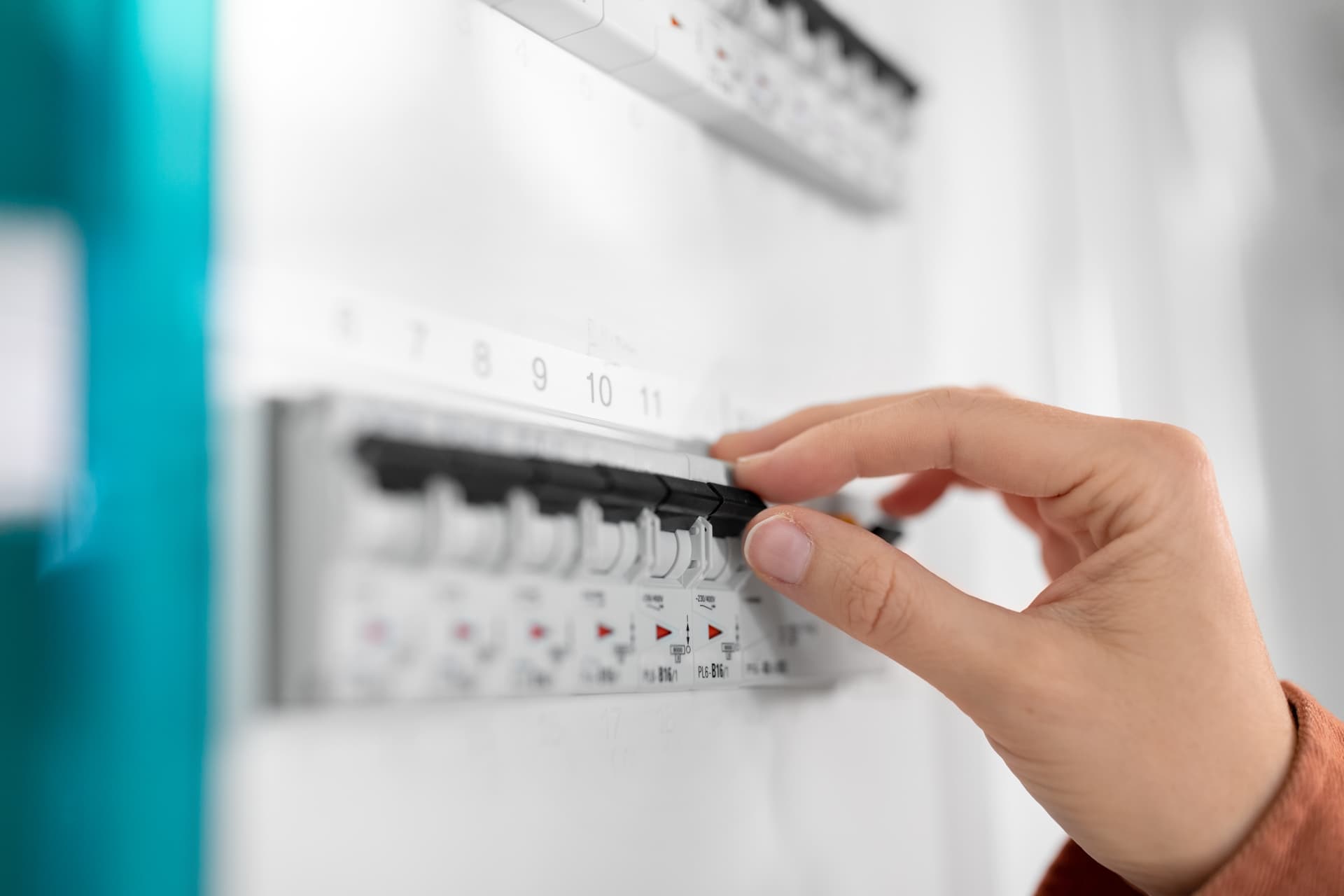
Solar panels are only one part of the installation. The generated electricity needs to reach the inverter, which converts it for use in the property, and connect safely into the property’s electrical system. During the survey, we consider the location of the consumer unit (fuse box), cable routes, available space for associated equipment and the condition of the existing installation.
Older homes may have electrical arrangements that need attention before new generation equipment can be connected. Commercial premises, larger homes and properties with several outbuildings can involve longer cable routes or more than one point where electricity is distributed around the building. These details influence where equipment can be installed and how intrusive the work may be.
Your intended use matters as well. A household that uses most of its electricity during the day presents a different design consideration from one that is usually empty until evening. The same applies if you may later want battery storage or an EV charger. We can consider those requirements while assessing the property, rather than treating them as unrelated additions.
What you can check before we visit
You can make the initial conversation more useful without climbing onto the roof or opening electrical equipment. Note which roof surfaces appear unobstructed, whether there are visible areas of damage, and where the consumer unit (fuse box) is located. It is also helpful to mention planned extensions, roof repairs or changes to how the property is used.
Do not walk on the roof, move tiles or inspect electrical connections yourself. A ground level view cannot confirm structural condition, fixing points or the suitability of the existing wiring. Those decisions need a competent electrical assessment and, where necessary, further inspection of the roof structure.
The right design follows the property
There is no universal roof specification that guarantees a good solar installation. A modern pitched roof, a repaired Victorian terrace in Crawley and a commercial building near Manor Royal may all need different solutions because their construction, access, shading and electrical layouts are different.
Here at D.Jones Electrical & Maintenance Services Ltd, we use the property assessment to identify those differences before installation begins. As a NAPIT Accredited business with Constructionline Silver registration, we approach the electrical work with compliance and safe integration in mind. To discuss whether your roof is suitable, contact us on 07858 473 659 or info@djones-services.co.uk.